


Listening and attention
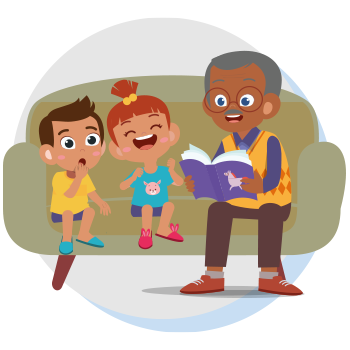
Children develop listening and attention skills by noticing and focussing on everyday sounds around them.
At school, it will help them to join in with activities and interact with their teacher, in small groups and as part of the whole class.
In Reception class children will:
- Reply when they hear their name e.g. when their name is called in the register.
- Follow simple two step instructions
e.g. ‘Get your book and put it on the shelf
please’ or ‘Come inside and hang up your
coat please.’ - Listen to a story and talk about things that have happened in the story.
Top Tip
Activities to help your child
There are lots of fun activities you can do to help your child build their listening and attention skills. Try the activities below!
Listening at story time
Ask them to choose a book and bring it to you to read. This is also a way to practise two step instructions.
Read the story, stopping every now and again to talk about what is happening.
'Stop & Go' games
Games that include actions like ‘Simon Says’, or songs like ‘Heads, Shoulders, Knees and Toes’ are great for developing your child’s listening and attention.
To help your child learn to follow direction in a fun way, try the Stop and Go game. Whilst moving around a space ask your child to “Stop”. They then freeze like a statue whilst they wait for you to say “Go”.
Where to start
- Listening Cones
There are lots of different sounds in the world around us. Pinpointing sounds your child can hear will help them focus and develop their listening and attention skills. Why not have a go at making a listening cone? Get a piece of paper or card and let your child decorate it how they wish. Once finished, roll the card into a cone shape and tape it together. When you next leave the house, whether you’re going on a walk, off out to the shops or playing at the park, take your cone with you and encourage your child to talk about what sounds they can hear all around them. - Making instruments
Make your own instruments. Collect plastic bottles for shakers and partly fill them with rice, sand, pasta, mud, whatever you can get your hands on! Make drums with old tins, saucepans, tubs etc. Once you’ve made your instruments, sing made up songs like “shake and shake and shake and STOP!” The aim of the game is for your child to listen closely for when they hear the stop word, this is a great way to develop their listening and attention. - Ball games
Whilst playing ball games with your child there are lots of opportunities to develop their listening and attention. When throwing or kicking the ball to your child, ask them a question, or call their name, or give them an instruction before you thick/throw it. Wait for your child’s response before you do it. Do not pass the ball until you have some response. This is developing your child’s listening and attention skills in a fun way. If they want the game to continue, they will listen and pay attention to you throughout.
Things to try next
- Reading stories together encourages your child to practice listening
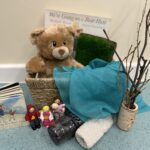
Together, choose a story to make into a story sack. Story sacks help bring the story alive and offer a multi-sensory approach to learning. Pick key characters and parts from the story that your child enjoys the most. These can be crafted with creative materials and recycling, or they could simple be something from their toy box. Once complete, give your child the story sack and begin to read it to them. See if your child can listen effectively and act out the story as you read it to them.
Examples of story sacks. 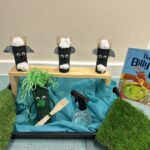
- Matching sound
Collect around 10 empty cups/bottles/boxes that you cannot see through. Gather items that sound differently when shaken, for example, rice, bells, small blocks etc. Fill two cups with the same item and repeat until all 10 cups are filled. Now, ask your child to close their eyes and mix up all the cups. The aim of this game is for your child to find the matching pairs, listening closely to the sound the shaker makes. - Drawing games
Give your child a piece of a paper and a pencil. You need one to. Sit back-to-back with your child and give them two step instructions on what to draw on their paper, examples of this could be, “draw a circle at the bottom of the paper”, “draw a circle in the middle”, “draw a cross in the circle”. At the same time, you must draw what you’re asking them to draw. The aim of the game is for your child to have drawn a picture similar to yours on their paper by listening closely to your instructions.
If you feel your child needs more support…
Start with these tips below.
- Play games where children are encouraged to follow one instruction for example; ‘Simon Says’ or you could try games like musical bumps or chairs to encourage listening. You can then build to two instructions when you think your child is ready.
- Read stories more than once so children can pick up the pattern. Choose a story with an easy-to-follow pattern, e.g., We’re Going on a Bear Hunt, Owl Babies and The Very Hungry Caterpillar
- Sing action songs, where children must follow the instructions. Take a look at the songs below to help.
Songs
Top Tip
Books
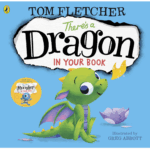
- There’s a Dragon in Your Book by Tom Fletcher and Greg Abbott (Puffin, 2021)
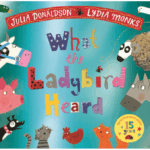
- What the Ladybird Heard by Julia Donaldson (Pan Macmillan, 2018)

This page is part of our Ready Steady School series, helping you and your little one get ready for school.
You might also find these other topics useful: