


Talking about feelings
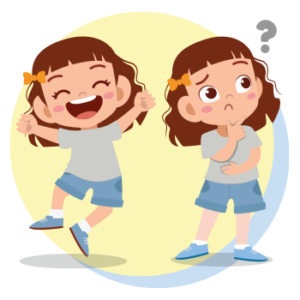
Being able to recognise different feelings and talking about them can be tricky to do for all of us.
It’s important to give your child lots of opportunities to explore and express different emotions.
In Reception class, children may:
- Be asked to share how they are feeling to a member a staff.
- Talk about what has made them feel that certain way.
- Recognise when they are feeling happy, sad, or worried.
- Recognise other’s emotions.
Top Tip
Things to try at home
Naming emotions
Help them to label their emotions. When they express an emotion let them know what it is called.
Make faces in the mirror that express different emotions and encourage your child to do the same.
Say things like: ‘Show me what a happy/worried face looks like.” Take turns so they can learn from you.
Feelings about school
Go on a walk near to your child’s school. Take some time to talk to them about how they are feeling about starting school.
It would be good to do this a few times before school starts, as their emotions might change.
Where to start
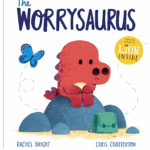
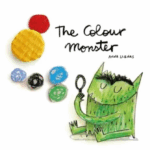
- There are so many great stories that give you opportunities to talk about feelings with your child. Find a book, if you don’t have it your local library might, and make yourselves comfy as you read it together. The colour monster or Worrysaurus are great books to start with. There is no need to rush this, take your time. You might like to ask your child about the different things that make them feel happy or sad, scared or worried. Take a look at the link for inspiration – Talking about feelings with toys
- Matching colours to emotions. This activity matches perfectly with the Colour Monster book. Draw 5 different coloured (Red, Green, Blue, Black and Yellow) circles on a piece of paper.
Let your child choose to draw some different things in the circle;- Red something that makes you angry.
- Green something that makes you feel calm.
- Yellow something that makes you feel happy.
- Blue something that makes you feel sad.
- Black something that makes you feel fearful or scared.
Things to try next
- Feelings box
Find an empty box and ask your child to put some things in it that make them feel happy, loved or calm. This could be a photo, a teddy or a timer. When your child is feeling angry or sad, encourage them to open the box, look and hold the things inside to help them with their emotions. You might like to decorate the box with stickers or colours, so it is personal to your child. - Emotion faces
On your next walk, collect some different things like leaves, conkers, twigs etc and use them to make faces showing different emotions. You could place them on a paper plate or a skin-coloured circle. Talk with your child about how the character might be feeling and how they know. You could also do this activity with paper plates and different pens or craft materials. - Games
Play games together that result in there always being a winner. Games like dominoes, snakes and ladders or pairs would be perfect games for this. During the game, take opportunities to talk to your child about how they are feeling. Once the game is finished ask your child how winning made them feel, or how not winning made them feel.
If you feel your child needs more support…
Start with these tips below
- Making timers with sensory bottles.
- Start with talking about the more obvious feelings and then move towards adding more abstract ones.
- Looking at pictures of emotions, model talking to your child about the emotion, e.g. “They look happy because they are smiling.” Ask them if they can pull the same face in a mirror. Move onto talking about what might have made them feel this way when your child is ready.
- Label your own emotions to your child, “I feel angry because I can’t find my car keys.” When your child is ready, move onto asking them what makes them feel that way, e.g. “I feel angry because I can’t find my car keys. What makes you angry?”
Books
- The Worrysaurus by Rachel Bright and Chris Chatterson (Orchard Books, 2020)
- The Colour Monster by Anna Llenas (Little, Brown Books for Young Readers, 2018)

This page is part of our Ready Steady School series, helping you and your little one get ready for school.
You might also find these other topics useful: